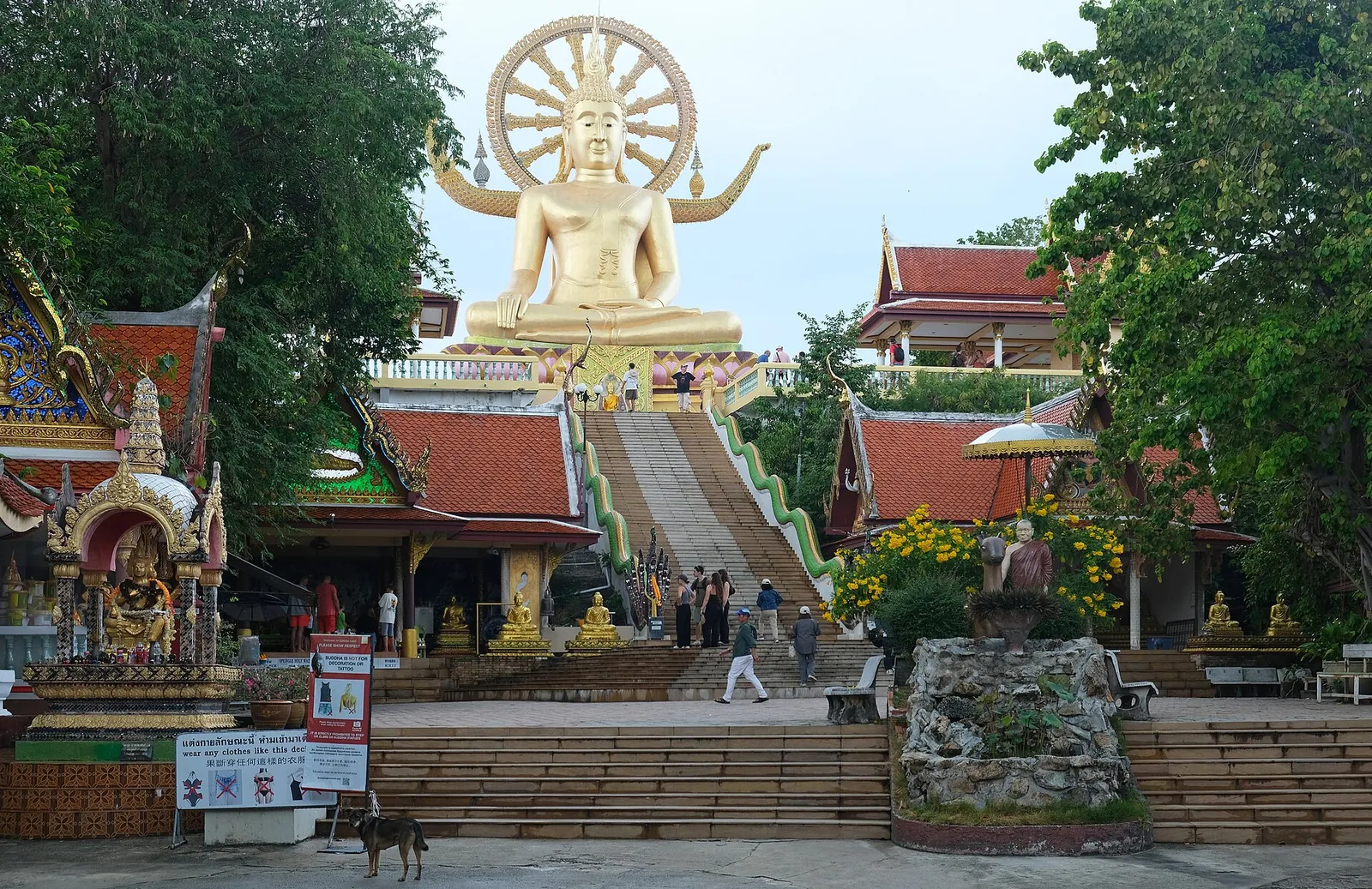

Wat Phra Yai: the Big Buddha
A gold-painted seated Buddha more than ten metres tall, built in 1972 on Ko Phan (Koh Fan), a small islet joined to the north-east coast by a causeway, about 3 km north of the airport. The Buddha is shown in the pose of victory over Mara, with the right hand reaching down towards the earth. Naga serpents line the staircase, and stalls at the bottom sell amulets and souvenirs. The beach next to it, Bang Rak, is now known simply as Big Buddha Beach.
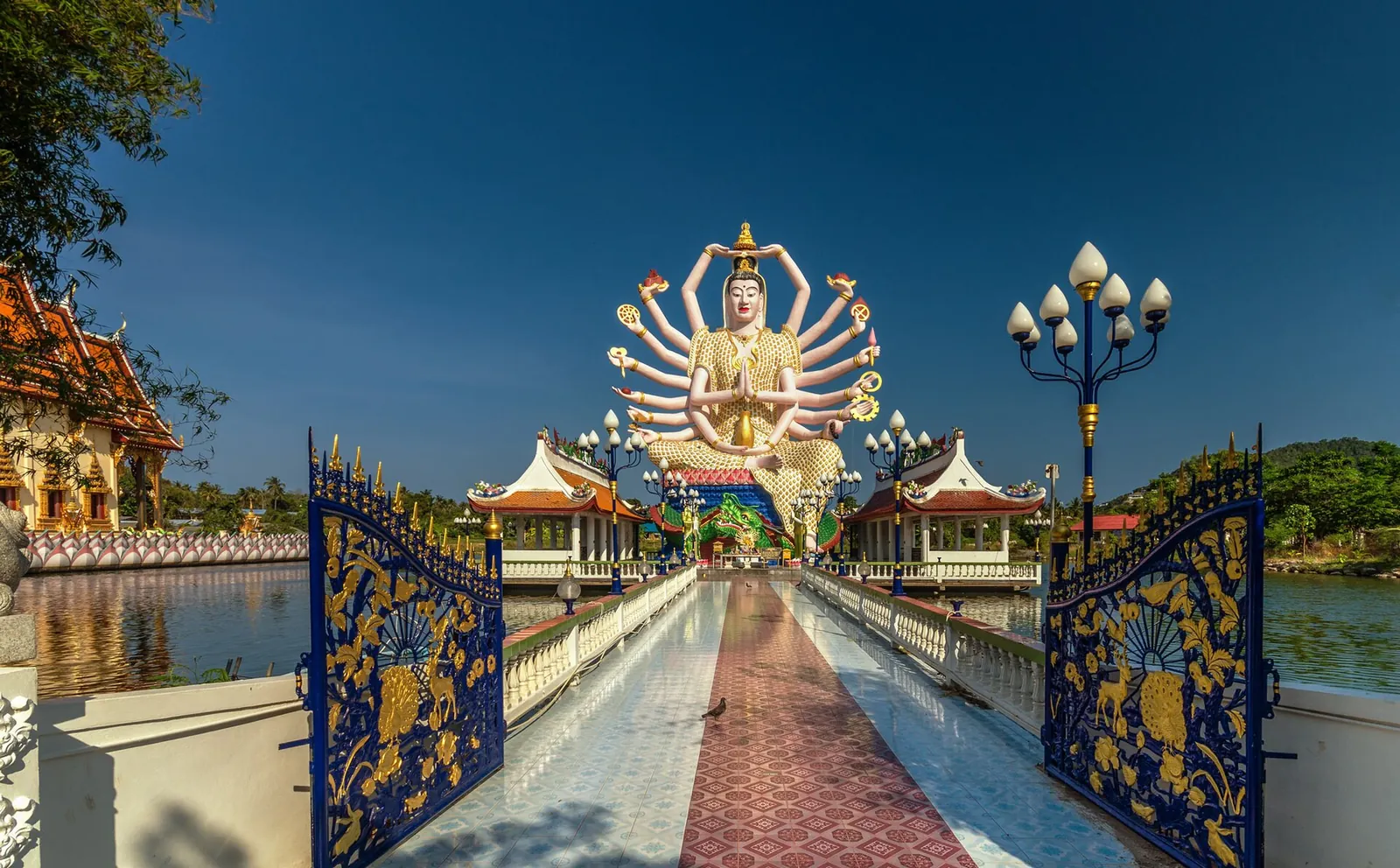
Wat Plai Laem
A short drive from the Big Buddha, this modern temple stands on platforms in a lake. Its main statue is not the Buddha but a many-armed form of Guanyin, the bodhisattva of compassion, made in Chinese style; a large white figure of Budai, the laughing monk, sits nearby. The design, partly by Thai artist Jarit Phumdonming, combines Thai and Chinese traditions.

Wat Khunaram and the mummified monk
On the ring road between Na Muang and Hua Thanon, south of the island's centre, Wat Khunaram keeps the body of Luang Pho Daeng, a respected abbot and meditation teacher born on Samui, who died in 1973. He asked for his body to be displayed as a reminder that life is impermanent. He sits upright in a glass case; the sunglasses on his face were added after the eyes sank. Visitors are welcome, but this is a place of worship: speak quietly and dress modestly.
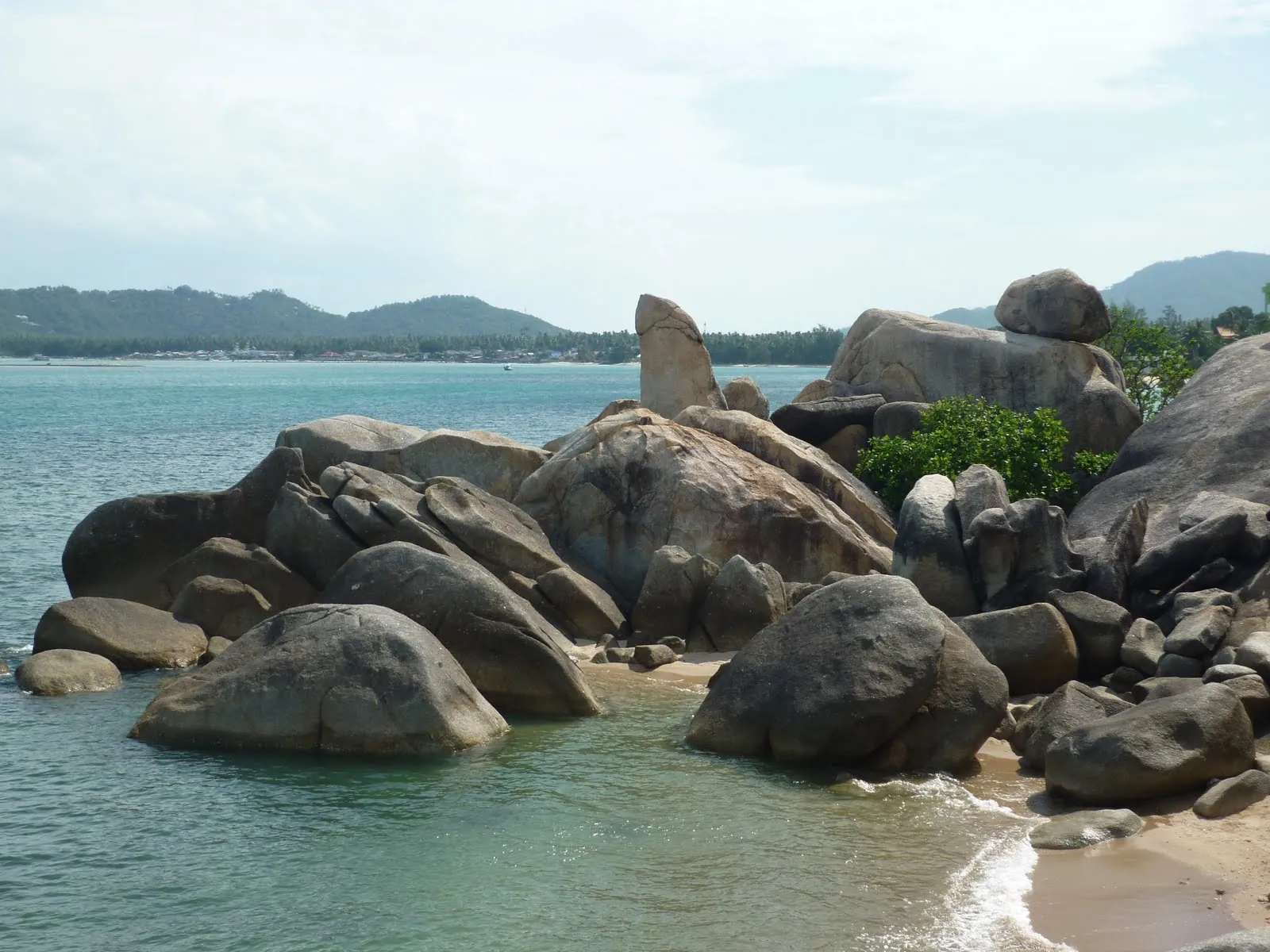
Hin Ta and Hin Yai
At the southern end of Lamai, two granite formations known as "Grandfather" and "Grandmother" rocks draw crowds because of their unmistakably anatomical shapes. Local legend ties them to an elderly couple lost at sea. The rocks are slippery when wet and the waves can catch people out.

Waterfalls
The best known are the two Na Muang waterfalls in the south of the island, reached by a side road off the ring road; the second, higher fall is about a 30-minute walk from the road. Hin Lad, near Nathon, has pools at several levels. Rocks around all of them are slippery, and visitors have been badly hurt or killed in falls. Do not climb the cascades.
Other places
- Wat Samret, one of the oldest temples on the island, more than 200 years old.
- Laem Sor pagoda, a chedi covered in yellow tiles on the south coast.
- The Guan Yu statue in Hua Thanon, said to be the tallest in Thailand, in one of Samui's old Hainanese villages.
Temple etiquette
- Cover shoulders and knees. Some temples lend sarongs at the entrance.
- Take off shoes before entering buildings, and do not point your feet at Buddha images or monks.
- Women should not touch monks or hand things to them directly.