
The pattern
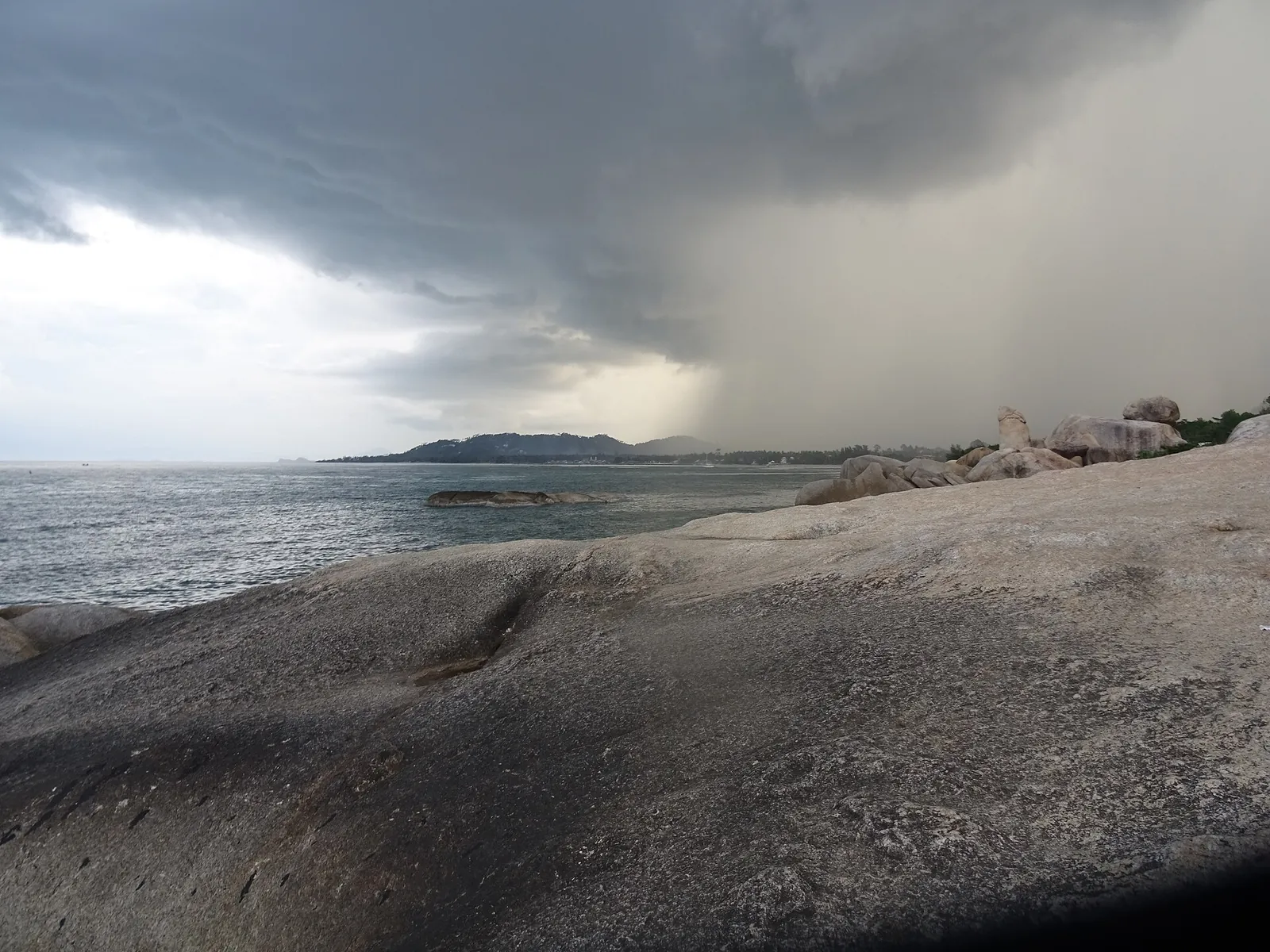
Samui has a tropical monsoon climate and is warm all year. It is drier than most of southern Thailand: about 1,960 mm of rain a year, against about 2,220 mm in Phuket. Only two months usually get more than 212 mm, and the heaviest rain falls from mid-October to early December, when the north-east monsoon blows from the Gulf. The rest of the year, showers usually pass in 20 minutes to an hour.
| Months | What to expect |
|---|---|
| January – February | The most comfortable weather: mostly dry, slightly cooler. High season. |
| March – April | Hot and dry, calm sea. Songkran (Thai New Year) in mid-April. |
| May – September | Hot with occasional showers. While the Andaman coast has its monsoon, Samui stays fairly dry. |
| October | Rain becomes more frequent from mid-month. |
| November – early December | The wettest period: long downpours, rough sea on the east coast, occasional flooding. Ang Thong is usually closed. |
| Late December | Rain eases; Christmas and New Year are busy. |
Based on Thai Meteorological Department records for 1971–2010, as summarised on Wikipedia. Individual years vary.
What the rainy months mean in practice
- Ferries and catamarans can be cancelled in high waves. Leave a day in hand before an international flight.
- Swimming at Chaweng and Lamai can be dangerous in the onshore surf. The north and west coasts are usually calmer.
- Visibility for snorkelling and diving drops. Koh Tao's dive sites have their own season; ask the dive centres.
- Prices are lower and hotels emptier, apart from the holiday weeks at the end of December.
Jellyfish season
Thai officials have warned that dangerous box jellyfish are seen off Samui and Koh Phangan mainly from July to December. See staying safe for what to do.